NARRATOR: All the commotion has
drawn other unwanted attention. Raptors begin to gather. Falcons and kites
watch on with keen eyes and carnivorous intent. And then it begins-- a spectacular aerial
battle of life and death, the hunter and the hunted.
Black falcons
swoop to the chase, attempting to single
out stragglers within the heaving mass. With dazzling effect, the
flock moves as a single entity, disorientating their
agile pursuers. The parakeets defensive
strategy holds for all but the weak and weary. Amidst the onslaught, the
parakeets must risk a drink.
Now, whistling
kites join the fray. Using a different strategy,
they target distracted parakeets on the water's edge. For the raptors, it's a
feast in the midst of famine. The patience of the
perentie is also rewarded.
He slinks in to capitalize
on fallen casualties. His adaptable diet
greatly increases his chances of survival. Like a passing desert
storm, the parakeets move on to the next watering hole. Peace returns to
the vast open land..
Today Jonathan investigates the amazing world
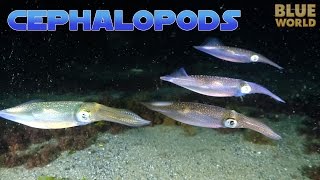
of suckers! Cephalopods! Welcome to Jonathan Bird's Blue World! An octopus is on the prowl, looking for an
unsuspecting fish to pounce upon. A cuttlefish is hunting with mesmerizing colors
to distract its prey. A school of reef squid hover in the water
column. What do these magnificent animals have in
common? They are all cephalopods.
Cephalopod means head-foot because this
animals head (the part with the eyes) is connected to its feet. The part out in front that looks like a head
is actually the body. And in fact biologists dont call those
things feet, they are called arms. So cephalopod is actually a terrible name,
but its what we have got.
Squid, octopods, cuttlefish and nautiluses
are all members of the class cephalopoda, but the really weird thing is that cephalopods
are mollusks. So they are related to animals like snails
and clams, which seems a little crazy. This is based mostly on their internal construction,
not their outward appearance. Perhaps the most obvious difference between
most cephalopods and other mollusks is the apparent lack of a shell.
The octopuses do not have shells at all. The squid have a small internal shell. Nautiluses are the only cephalopods with an
external shell. Nautiluses are found in the South Pacific
and Indian oceans, typically in deep water.
Cephalopods have well-developed nervous systems,
much more sophisticated than other mollusks. And they can be quite inquisitive. The cephalopod eye is one of the most notable
examples of convergent evolution in all of the animal world, because this eye evolved
from completely different ancestors than the eyes of mammals, yet it turned out to function
in almost the exact same way. Cephalopods, therefore, have extremely good
eyesight.
Of course the most well-known of the cephalopods
are the octopuses, named for their eight arms. They are masters of disguise, able to change
colors and skin patterns instantly. With no shell, or bones the octopus can fit
through tiny holes. They make terrible pets because they can escape
from virtually any aquarium! The octopus has a mouth with a beak used to
bite prey.
A hunting octopus often balloons over a rock
to trap a fish. Then it will use venomous saliva to kill the
prey when it bites. But the Blue-Ringed octopus of the South Pacific
has venom so powerful that the bite of this octopus is lethal to a human. The mimic octopus is said to mimic other animals
in order to hunt or evade predators.
This one has a convincing flounder imitation
going on, but its unclear how looking like a flounder is advantageous. It might just be the most efficient way to
swim and stay camouflagedconvergent camouflage if you will. A coconut octopus in Indonesia carries a shell
so that when the need arises, she can hop inside and hide. This clever behavior makes the octopus a tool
user, putting her in a category of animals considered more sophisticated and intelligent,
like monkeys and dolphins.
In the cold water of Puget Sound, a Red Octopus
is carrying a crab home for dinner, walking on the tips of its arms. That takes coordination! Nearby, a Giant Pacific Octopus breathes by drawing
water into its mantle, a cavity in its body and squirting it back out through a siphon. Not only does this move water over the gills,
but it gives the octopus the ability to squirt water. The siphon can be used for jet propulsion,
squirting an octopus away at high speed.
A reef octopus in the Caribbean not only squirts
away from me, but leaves a smoke screen behind in the form of an ink cloud. Squid and cuttlefish are similar to octopuses,
but their small internal shell makes them rigid and torpedo-like. So, while the octopus often crawls along the
bottom, the squid and cuttlefish like to jet. In the North Atlantic Ocean, Longfin Squid
cruise through the New England shallows.
But when they get annoyed by my camerathey
can produce ink too. More than 8 thousand miles away from New England,
the waters of the Philippines are warm and clear. After the sun goes down, a Flamboyant cuttlefish
comes out to hunt. While the octopus has eight arms, the cuttlefish
and squid actually have ten.
Eight of them are of the same length, while
the other two are extra long, and used to grab prey. These two additional arms are called the tentacles. Cuttlefish are often quite curious, and sometimes
come right up to my camera for a look. Their skin patterns change rapidly thanks
to skin cells called chromatophores.
At the New England Aquarium in Boston, theres
an exhibit where you can watch cuttlefish up close. And when you look carefully, you can see the
chromatophores working. At feeding time, the cuttlefish pay close
attention, and they turn on the camouflage. Then the cuttlefish strikes.
Even slowed down to one quarter speed, its
lighting fast. With a high speed camera, a flamboyant cuttlefish
blah blah In another tank, a Giant Pacific Octopus guards
it eggs. All cephalopods lay eggs to reproduce. Octopuses tend to guard their eggs.
Back in Indonesia, the Coconut octopus is
releasing thousands of baby octopus hatchlings from her clutch of eggs. She carried them around for months while they
incubated. Squid and cuttlefish do no such thing. The Atlantic Longfin squid lays its eggs like
most squidcigar shaped bundles of eggs attached to the rocks or kelp and left to
fend for themselves! The Flamboyant Cuttlefish eggs are about the
size of a pea--laid on a rock.
Soon a baby cuttlefish is born. The cephalopods are an amazing group of animals. Its hard to imagine such advanced animals
being closely related to such primitive mollusks as the conch. Cephalopods can change color and texture with
chromatophores, they have extremely sharp eyesight, multiple arms that are capable of
complex tasks, and they are clever enough to use tools! They are definitely one of my favorite inhabitants
of the Blue World..
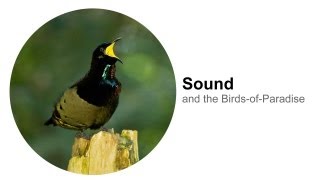
We think of Birds-of-Paradise
as these visual, visually amazing creatures, but they use sounds. Its a jungle out there. When most people think of Birds-of-Paradise or look at pictures of them
or video, theyre not thinking about them as being interesting
acoustically. But yet, when you
step back and you bother to pay attention to sounds
of Birds-of-Paradise, you realize that the kinds of
sounds that the males make in courtship, or prior to courtship,
are nearly as phenomenal as the way that they look and behave.
This usually is something
that begins as a long-distance way of attracting females to
the display site, so males have a vocalization I always think of it
as their primary vocalization or their main territorial vocalization
or their main advertisement vocalization. And that's the one that we use even
as researchers or scientists or birders to locate them. Its the most conspicuous
thing that they do, and thats by design. Thats how the females
find them as well.
Then in the process
of courtship display, there's a whole range
of other sounds that are also given but they're much less conspicuous,
much less commonly heard by us. Sometime these are
the same sounds but much more commonly they're not,
theyre a totally different set. Just like all thirty-nine species look
distinct, they do all sound distinct. Now some of the ones that are more
closely related that also look more similar, they also sound more similar.
But when you find two species
that look extremely different, like a lot of Birds-of-Paradise
do from one another, they actually sound as extremely different
as they look. Even though there's a huge amount of diversity in the
types of sounds Birds-of-Paradise make, I would say most people still think of them as being these
more crow-like caw caw caw kind of sounds. And no doubt, a lot of
species do make a plain, not-that-interesting, sounding
kind of crow-like, squawk. Parotias do that, a handful
of other things do that.
But, that being said, the ones that do have
interesting sounds, they sound nothing at all like even a bird.
In fact, many of them don't even sound like things made by a living organism.
They sound like a sound that would be from a human machine. Several good examples come
to my mind as being the classic or the best examples of those
extreme sounds of Birds-of-Paradise. The Brown Sicklebill, in particular, makes this very non-bird-like
machine gun sound.
Another one of the greatest
sounds, is the male King-of-Saxony. It gives this very
unnatural sound thats just unlike anything you've heard before,
certainly coming out of the mouth of a bird. Then there are a number of species that
are kind of reminiscent of a bird-like sound. Some of these would be the Curl-crested Manucode, which in my mind often sounds
a little bit like a UFO landing.
And then things like
the Magnificent Riflebird, which has a nice
musical quality to it. Even though it's called the
riflebird, it doesn't sound like a gun. A handful of species have very
conspicuous non-vocal sounds that they make, usually in the context of
close proximity display to a female. The best examples of that are the riflebirds.
All three species,
when they lift up their wings and theyre moving them back and forth,
and the males are usually hiding their head
behind their wing. All three of them have this
sound that sounds like some kind of rustling fabric or paper. Swoosh, swoosh, back and forth, that moves
with the wings and that's actually being produced by the wings themselves,
thats not a vocal sound. The Superb Bird-of-Paradise
is another really great example where during the main display there's this
snapping sound.
He's doing something with his wings
and it looks like with his tail where hes moving
them out quickly, creating like a
whip-like "snap". I think the thing
that I find the most intriguing or
interesting about sounds of Bird-of-Paradise
is that for literally centuries, people have been
so focused on the way that they look, and that's obviously for good reason
theyre pretty awesome, pretty extraordinary. But sound is just another
extreme thing, just like the colors and the behaviors, in that they've evolved as much diversity in
the way that they use sound for courtship and for attracting females, as any other kind of ornament
that Birds-of-Paradise have. And thats what really
makes the sound special in Birds-of-Paradise..
Alright! This is John Kohler with growingyourgreens.Com
coming at you in HD from the backyard garden, and today we've got another exciting episode
for you. This is not a fun one, and this one's having to do with pests. Pests in your garden,
and one particular kind of pest you may be having, and I know I am. Now this stumped
for a couple days and I was like, 'what the heck is going on?' You know, and what happened
was this.
I simply came outside and these are my beautiful purple perennial tree collards
that under extreme conditions like the nice hot heat they do flower and go to bulbs and
seed, but that's alright. You can cut these guys off and they'll continue to grow and
I have let these gone to full term and flower, seed, and then produce the seeds and then
cut them back and then the pant continues to grow and this is simply amazing. So, this
year what happened was they went to seed and this year I came out and all the seed pods
are getting jacked up like, 'okay, John, what's going on? Usually at the end of the season
when the seeds are finally done and dry, the seed pods will bust open and fall and then
I'll have tree collards coming up my wazoo, but in this case the seed pods are looking
all green and they're all messed up and damaged,' and I'm like, 'man, what's going on here?'
And I couldn't figure it out until I was walking outside just the other day. So, actually let
me show you guys actually what I saw when I was walking outside.
So, now I'm about to
go outside and show you guys what those little spur dudes are going in my thing. Alright,
I got the zoom there. See that little sucker? Look at what that little sucker's doing. There's
a little bird, eating my tree collard seeds, little scumbag.
Look at that. He's snacking
out, man. That's a nice fat source for him. Totally eating it.
So, we're going to have
to prevent him from eating my tree collard seeds anymore. So, here's the damage to the
tree collard seeds. The birds basically peck these open like little pods. They eat all
the little beans out.
These're not even developed seeds yet, 'cause they haven't been out long
enough, but they're a high source of fat to the birds, and yes we can actually also eat
them. Wouldn't give us a lot of food. I'd rather save these for the seeds themselves,
and, you know, they're really tearing these guys up. I don't know if I'm even going to
have a good yield of seeds this year 'cause they really picked the majority of these guys
up, and, you know, now because it was highly damaged, I might not have any tree collard
seeds.
So, this is what nature does. So, we're going to have to be proactive and take some
steps that they cannot do this in the future. So, come back at you in a second. So, man,
isn't that incredible? You guys say the little bugger, man.
The little dude was eating my
seeds. I mean, it's all good. I'm glad I could feed nature, but, you know, he needs to be
eating something else, not my rare perennial tree collard seeds that rarely go to seed,
and these seed are quite valuable 'cause I. Want to save the genetic diversity to spread
those to other people so that they can also grow these cool plants.
So, I had to figure
out a solution so that the birds can't get in here to eat but also make in convenient
for me to still harvest my tree collards when I want to eat them. So, you know, I could
go out and buy bird netting, but that would be an expensive having to buy more stuff or
I could get hang some CDs, some compact discs, on string and that would kind of spin around
and that could kind of scare the birds because that would be good or you could take some
like milar film like milar balloon, that material, but it up into little strips and then tie
them onto places and that may blow in the wind and scare the bids and keep them away,
and while those methods may work, it doesn't really protect your junk in the trunk. I like
protecting my junk, especially if I'm playing sporting events, but anyways, we're going
to protect my tree collard seeds because they are important and they haven't even yet developed.
They're still babies and they're getting eaten. It makes me so sad.
So, let me next show you
guys how I'm going to protect my tree collard seeds with a cool item that actually I just
happened to save. So, now I'm going to show you guys how I'm going to protect my tree
collard seeds from getting eaten from the birds. I've got these bags here. So, what
these bags are.
They're poly bag and actually I get coconuts in these. I buy coconuts in
bulk in the husk, and I guess these bags are very similar to the bags you might bet a big
bag of potatoes or a big bag of onions, you know, or a big bag of oranges sometimes, but
this is like the super huge gigantic size. Usually the ones for potatoes or onions are
bit smaller, and I don't know where else you'd get these but I have these laying around because
I really don't like throwing anything out and that could be a thing, you know, if you're
gardening and you're single like I am, but it could be a bad thing if you're married,
so good thing I got a good big garage and maybe I'll even build a shed here to store
some extra junk, but hey, one mans junk is another mans treasure, and this today is a
treasure because it's going to allow me to save my perennial tree collard seeds form
getting eating by the birds, and maybe another solution would be to get a good cat. Anyways,
so, all we're going to do is take this big bag here, and as you can see there's the opening,
and this bag is so huge, it'll fit on me.
Stick 'em up I want all your vegetables. So,
we're going to take this bag and put all these stalks here that have the seeds growing, if
they have the leaves I'm not going to keep them in the bag 'cause I want to be able to
harvest those guys, and luckily most of the guys that have the seeds are to be segregated
out and I think they're right here. So, we're going o take these guys on plant and we're
going to bag it on up and to help inside this little bag here I've got a bamboo stick to
keep this straight. Hopefully that's going to allow me to put this on a little bit easier
so it doesn't collapse on me, and we're just going to go ahead and stick this all the way
in, just like putting a bag over your junk when you're going to use it.
So, the last
thing is we're going to go ahead and grab some string here. We've just got some twine.
Just going to go ahead and roll off a bunch, just break it off, and we're going to go ahead
and tie off the bottom. This is very important so that the wind doesn't blow this off and
the bids won't be able to actually get inside and then get up in there and have free reign.
So, we're just going to go ahead and pull this pretty taut. That's a cool word, taut.
I was taught a lot of stuff in school, but I'm also able to pull this taut and tie it
off.
Bet you didn't know I was an English major. Actually I wasn't an English major,
so don't learn English form me, just learn gardening. Alright, so we've got this taut
here. Just going to go ahead and put our string around and tie this guy off.
Alright, we're
all tied off and check it out, this is now my protected tree collard seeds. A couple
are sticking out here. They might be able to get to 'em, but that's alright. The majority
of them are going to be safe form the bids and I will be able to harvest them for my
uses instead of the birds eating them.
Another thing I was considering for, you know, mother
nature and for the bids, because it's really sad in this day and age that the birds have
to come to my garden to eat my perennial tree collards, I mean they are mineral dense mineral
rich with trace minerals, probably taste better than anything else they could find in this
big city, 'cause there's not a lot of nature that could feed the birds anymore, so I did
consider, you know, maybe getting a bird bath and actually a bird feeder to feed them and
supply them with food but then I don't want necessarily to encourage birds to come into
my place because when that runs out hey might come to my garden and eat and know that this
is a valuable food source for them. So, I. Don't really want to encourage them to come
so I decided to just wrap this up and let them find some place else to go. Another thing
that may happen that has happened to me before is that in the heat of the summer when I have
nice juicy plump red tomatoes, the birds are going to come and peck at the tomatoes.
Now,
they're not necessarily pecking to eat the tomatoes. They're pecking for the water. Tomatoes
are full of water, and that's why they're good for us, besides that they're rich in
other things like lipopine and other nutrients. So, you know, at that point I may just have
a bird bath to see if I could divert them, you know, to go to the bird bath instead of
pucking my tomatoes for the water, or I might just se these bags once again to cover my
tomato plant if they're small so that I can eat my tomatoes and not the birds.
So, you
know, the last thing I want to mention today is that there will always be creatures, pests,
whatever you want to call them, whether they're birds, alligators, lizards, moles, boles,
cats, dogs, rabbits, raccoons, anything, they're going to be coming at you to you're garden
to eat your stuff because you're providing them food, you're providing them gourmet food
that they can't get anywhere else. Some of the best stuff, especially if you're using
some of my growing practices including a lot of organic matter, the compost and some of
the trace minerals. Man, the foods really going light them up like it lights you up
when you're eating it. So, but there's always a way to keep them out.
Just be persistent.
Just use your brain and think of creative ways you can use to, you know, keep them out.
I wouldn't normally have to go buy some, you now, bird cloth or whatever, and that costs
some money, but I had these guys laying around and I always love to find reuses for something's
that I have saved previously. So, hopefully you guys have enjoyed this episode, you're
a little bit more motivated now to, you know, deter pests however you can. Once again, my
name is John Kohler with growingyourgreens.Com. We'll see you next time, and remember, keep
on growing..
Just once, I'd like to get out of LaGuardia on time. Well, you know the only way to get out of LaGuardia on time? Yeah, whats that? Fly out of JFK! Huh, funny... Take off fuel quantity verify. 19,000 Pounds required, we've got 21,048 on board.
19,000 Pounds required, we've got 21,048 on board. Radio: Cactus 1549, runway 4 cleared for takeoff. Cactus 1549 cleared for takeoff. Positive rate.
Gear up please. Gear up. Nice view of the Hudson. I'll never get over how beautiful it is up here.
Life's easier in the air. Yes, it is. Birds!!! Whoa!!! [Birds hitting airplane, engines catching on fire and shutting down] Oh shit!!! Oh, God. [Bing bong] Is this turbulence? I'll check with the captain.
Whats goin on? Its okay. Everyone, might be a good idea just to keep your seatbelts on. You got one rolling back. (Whirring and whizzing noise) You got both of them rolling back!!! Ignition start.
[Engine clicking] I'm starting the APU (auxillary power unit). Just double check your seat belts, please. Seat belts, gonna make sure your seat belts are fastened. Make sure your seat belts are fastened! Seat belts.
What do you think that was? Think it was a bird strike. Then we're going back to LaGuardia! Yeah... Get out the QRH. We've lost thrust on both engines.
Mayday Mayday Mayday this is Cactus 1549, we've hit birds! Maintain 15000, Delta 331. We've lost thrust on both engines. We are turning back towards LaGuardia. Okay, you need to return to LaGuardia? Turn left heading 220 Which engine did you lose? Both.
Both engines. SOOP! I have an emergency. What's the report? Both engines. What? Both engines gone, no thrust.
All right, LaGuardia says go to Runway 13 Tower stop your departure, got emergency returning. 1549 Bird strike. He lost both engines, returning immediately. Which engine? He lost trust in both engines, he said.
Cactus 1549 if we can get a few do you want to try to land Runway 13? We are unable, we may end up in the Hudson. I got an A320 diving for the River! Al, stack all the inbounds to LaGuardia. Put a hold on the tower, please! Come on guys, stay on point. What about over to our right? Anything in New Jersey? Maybe Teterboro? Teterboro Tower? I need a runway, Cactus 1549 needs to go to the airport right now.
Newark tower what have you got? Runway 29 clear and ready. Yeah, you need emergency landing? Yes. Okay, yeah, off your right side is Teterboro Airport. Shit..
Today, Jonathan visits the National Aquarium
in Baltimore to learn about the job of a Dive Safety Officer. Welcome to Jonathan Birds Blue World! Its November, and Cameraman Bill and I
are on a road trip, driving from New England down to Baltimore Maryland. Cameraman Bills driving! Baltimore might not be the first place you
would expect an episode of Blue World, but were here to meet an old friend at the
National Aquarium in the heart of the waterfront district. We pull up bright and early and head over
to the entrance.
The waterfall is an impressive first sight
inside the foyer, with its pool filled with salmon. The glass walls of this impressive facility
afford a gorgeous view of the city and harbor. The National Aquarium has a number of large
marine exhibits, like the Blacktip Reef Exhibit, looking like a coral lagoon underneath the
skeleton of a finback whale. Shark Alley contains several species of sharks
and sawfish! And there is a fantastic touch tank area where
guests can touch skates, horseshow crabs and even jellyfish.
Public relations manager Lauren Hartman is
taking me down to the diving area to find Holly. Holly! So good to see you! Welcome to the National Aquarium! Thank you. You are just in time for our dive briefing. Oh awesome, lets go.
Holly and I have been friends for more than
20 years, and she is the Dive Safety Officer here at the National Aquarium. So a lot of these are just trending ones. Zeke the Zebra shark is still in Q pool, okay. Hes off exhibit for time out.
Lady ray Today, Holly is giving the morning dive briefing
to the volunteer divers who will be cleaning the exhibits and feeding the fish. Her tail is healing actually really nicely,
we got a look at it the other day, okay? The Crooked jaw hogfish As the DSO (Dive Safety Officer) for the aquarium,
Holly has a lot of responsibility. So Holly, tell me about your job. What does a DSO do at an aquarium? Okay, so the general theme is: manage dive
safety operations for all--whether its on-site like aquarium exhibit diving, or off-site
which we consider field diving.
So, its safety, equipment, and training. Its putting on the manager hat. Here we interface with the husbandry team,
as far as how they work with our volunteer divers, because the volunteer divers help
feed and clean the exhibit. Probably our biggest customer is husbandry
but we work with media relations folks.
Well work with philanthropy for VIP dives. We have a guest immersion program that we
share with an outside dive shop, which works really well for us here. So youre a manager, youre a trainer,
youre a dive buddy. But ultimately, DSODive Safety Officerhow
many divers are you managing the safety of here? Over 200.
Over 150 volunteer divers, soon to grow next
year with additional recruits. We have probably one of the larger volunteer
diver groups in the country for aquariums. Great, awesome. Well lets go diving! Lets go! Its always a little bit weird, but really
exciting, to be putting your gear together in a hallway.
Im not out on a boat, Im in a building! Cameraman Bill and I will be joining Holly
on a dive in the Atlantic Coral Reef exhibit, as she does her daily inspection. This exhibit is a ring-shaped tank containing
over 1,000 fish. So where were going to enter today, is
this platform. The exhibit is 13 feet deep.
It always to me seems a lot deeper because
when you walk it, you have several layers. Thus spirals down to the Shark Alley Exhibit
and then it spirals down to underwater viewing for Blacktip Reef. Its a really cool system, its sort of
stacked. We suit up on the dive platform.
Next we drop into the warm 75 water. Talk about convenient diving! As I descend, the early morning vacuuming
team is just finishing up, pulling their hoses out of the water. Holly will lead me and Bill around the exhibit. The entire inner wall of the exhibit is glass.
The fish can see out just as well as the people
can see in. A Bonnethead shark catches my eye. This little guy is like a mini-hammerhead. A bit shy around our lights, but still curious.
On the gravel bottom, a stingray, and flying
overhead, a cow-nosed ray. These animals are fed every day by divers,
so they are not shy at all. A pair of porcupine fish are a type of puffer. They can inflate to the size of a basketball
if threatened, but they rarely need to do that in here.
Some of the fish are so friendly that they
come too close, blocking your view. This Hogfish wants some camera time, until
he is cut off by a Queen Angelfish! As Holly makes her way around the giant ring-shaped
tank, I follow behind, amazed by the size of it. With 335,000 gallons, this exhibit has as
much water as about 25 swimming pools! Holly is looking in every crack and hole,
because she is trying to find one of the moray eels which has been hiding for a few days. The two morays, known as Oscar and Felix are
known to vanish for days at a time.
The reef structure in the exhibit, while its
not living coral, provides the same kind of habitat for the fish that a living reef would. And as well, it has interesting features for
divers including a great swim-through, which makes it feel like an underwater playground. As we near the end of the dive, Felix is nowhere
to be found, but the tarpon wants some camera time. Soon our inspection is over and we have to
leave the best dive in Baltimoreclear and warm with no current.
Getting to dive here great fun. And I learned that you can start out as a
volunteer, and maybe if you stick with it long enough, work your way up to DSO..
From dropping turtles on peoples heads
to ripping their guts out, here are 10 of the most dangerous birds in the world. 10.) Red-Tailed Hawk
Red-Tailed Hawks are enormous birds commonly found across North America. It can often be seen perched on roadside poles
or soaring over open areas looking for prey from way up high. Hawks are some of the top predators in the
world and typically weigh between 2-4 pounds (0.9-1.81Kg) and have a wingspan of nearly
5 feet.
Hawks have exceptional vision and in fact,
a red-tailed hawk can spot a mouse from 100 feet high! Their eyesight is their main hunting tool
and they have over 1 million photoreceptors per square millimeter compared to us humans
who have about 200,000. Hawks can dive 150 mph through the air and
grab their prey either from midair or off the ground. It will grab its prey with its massive talons
that are capable of crushing small bones. They are keen and efficient predators but
arent ashamed at all about stealing food from others.
Of course they are extremely deadly to their
prey which ranges from everything from small mammals to birds, to reptiles. They are fierce protectors of their nests
and see humans as a threat. If you are caught too close to a red-tailed
hawks nest, it will swoop down and try to scratch your eyes out with its talons. A red-tailed hawk built a nest near a school
and several people were severely injured when they were gashed in the head by the hawks
talons.
Some PE classes were moved inside. 9.) Snowy Owl
The snowy owl is the one of the worlds most beautiful birds. They are known as being the one of the worlds
most northerly bird of prey although in these recent extreme winters we have had the past
few years, snowy owls have even been seen in New York City. These impressive birds breed around the Arctic
Circle in the tundra region.
They can easily survive in the lowest temperatures,
as low as minus 50 degrees. The snowy owl attacks its target very strategically. Their predator list is very short and consists
of Arctic foxes, Jaegers and wolves. The Snowy Owl is a very fierce protector of
its territory and it sees humans as a threat (as well as it probably should).
The thing with most birds of prey is that
they are pretty smart so they adapt their attack strategy depending on the threat. If the target is human, it may go after the
head and the eyes with its razor sharp talons, which can cause serious injuries. They will attack anything that is a threat
to their nest and territory without holding back. If this ever happens to you, protect your
face and run away!! The Snowy Owl typically weighs between 3.5
To 6.5 Pounds and has a wingspan of around 5 feet.
They are daytime hunters and usually eat any
small mammal they can find. An adult owl may eat around three to five
lemmings each day (1,600 per year). 8.) Bearded Vulture
The bearded vulture, also known as the lammergeier, is a pretty intense bird. It is a bird of prey and is known for its
unusual habit of dropping bones or freshly killed corpses on top of rocks to shatter
the bones so they can get to the marrow inside.
Its a little bit creepy as it also dyes
its feathers blood red with soil that contains iron oxide, making it one of the most feared
birds in the animal kingdom. There are people who believe that the bearded
vulture has carried away children for food, however this has never been proven. Its more its fearsome reputation that precedes
it. They can be found in Europe, Asia and Africa
and have a wingspan of about 6-9 feet.
Its name, lammergeier means lamb vulture
in German because that is what it was famous for eating. 80% Of the birds diet consists of bones
and bone marrow. After finding a picked-over carcass, the bird
will drop it from a tremendous height in order to bust it open. These birds are very little danger to humans,
except for their dropping technique.
Not only do these birds pick up carcasses
but they also pick up other animals like large tortoises. If you are around the area when the bird is
about to drop its dinner, you it could be seriously injured or even killed. It is said that the Greek playwright Aeschylus
was killed when a tortoise fell from the sky. Maybe the lammergeier dropped it.
7.) Barred Owl
The Barred Owl is another dangerous owl to look out for. These beautiful brown and white birds can
camouflage themselves quite well and you could walk right by one without even noticing. The Barred Owl is a large, round-headed owl
which is also widespread in North America and prefers to live in forests and woodlands. Its main natural predator is the great horned
owl and it will move away to another part of its territory if one is nearby.
The barred owls have a maximum wingspan of
about 4 feet. One of the most interesting things about barred
owl is their way of flying as they can fly noiselessly. However, this can make them especially dangerous
not only to their prey, but also to humans since you cant hear them coming. They swoop and attack the head of the target
with their razor sharp talons.
They will claw, peck and squeeze their prey
(or their perceived threat). They are known to cause serious head injuries
to humans, especially hikers. They are especially aggressive during nesting
season, like almost every other bird on this list. Barred Owls eat many kinds of small animals,
including squirrels, chipmunks, mice, voles, rabbits, and birds.
They hunt by sitting and waiting on an elevated
perch, while scanning all around for prey. They have excellent hearing and eyesight. Though they do most of their hunting right
after sunset and during the night, they are also known to hunt during the day from time
to time. 6.) Great Northern Loon
The great northern loon is a diving bird which you are probably familiar with.
They are a migratory bird that spends its
summers in North America and Winters in the South along the coast. SO whats the big deal about a bird that
looks like a duck? For one thing they have a dark side. They are known for harassing, attacking and
killing other waterfowl like mallard ducks. They will kill each others babies, and
even each other.
Nature is rough! Kill or be killed! They weigh about 8 to 12 pounds and have razor
sharp and pointed bills to spear apart the fish they eat. They are also known for their signature blood
red eyes and their eerie and haunting call. However, their red eyes are only present in
the summertime, in the winter they are known to have gray eyes. The great northern loons are not social birds
and you are most likely to find them hanging out by themselves.
While these birds are not normally known to
attack humans, it has happened. There are stories where these birds have mistaken
someone for a predator and stabbed them with their bill, once even killing an ornithologist. This was definitely a freak accident, like
the stingray that killed Steve Irwin but if you are not careful, it is possible for these
animals to hurt you. Admire them from a distance! It is important to note that deaths caused
by these birds are extremely rare and that as always, humans are much more damaging to
them than they are to us! 5.) Mute Swan
The mute swan looks like a very peaceful creature, since it is so graceful and beautiful, but
it is actually a very large and territorial bird so be careful! This is especially true during nesting season
when they become even more aggressive.Originally from northern Africa, swans were introduced
to the rest of the world where they have done very well.
If you go near mute swans and they feel threatened,
they will run at you with hissing sounds and strike at you with their strong wings. Considering their size and strength in their
wings, their attack could result in serious injuries, especially to the eyes. They can weigh up to 28 pounds with a wingspan
of almost 8 feet. There have attacked kayakers, swimmers, and
people just walking around lakes.
Michigan is having a big problem with these
birds because they are not afraid of humans and people often get into close contact with
them. As the population grows, so do the conflicts. They are also a danger to native wildlife
and are attacking and killing native birds. A kayaker in Chicago was killed when the swans
knocked him out of his kayak and blocked him from swimming to shore.
The father of two drowned to the shock of
witnesses and police. They are also known to have a great appetite,
eating up to eight pounds of food in a day. Mute Swans mainly eat aquatic vegetation,
along with some animal prey including frogs, tadpoles, fish, snails, mollusks and insects. These birds are also known to be some of the
heaviest flying and most intelligent birds in the world.
Studies have shown that they actually have
facial recognition so if you live in an area with swans be careful because it will know
who its friends and enemies are. 4.) Australian Magpie
Out of all of the dangerous, deadly, venomous creatures that live in Australia, the most
feared animal is the Australian magpie. This medium-sized, black and white bird lives
in grasslands, fields, parks and gardens across most of Australia. In the springtime (Sep and Oct for them) when
nesting period arrives, it is swooping season!! The magpies become extremely aggressive and
locals will start sharing online maps with nest locations so that the next person can
avoid that area!! Magpies will do whatever it takes to protect
their nest and because there are so many of them they are a huge problem.They will claw
at your head and face and try to poke out your eyes.
Cyclists will attach zip ties that stick up
on their helmet so the birds can still swoop, but wont get too close. Each year, Australians suffer from eye injuries
and will fall off their bikes, breaking bones and all kinds of things. Magpies are one of the most intelligent animal
there is and they are able to recognize themselves in a mirror. Because they are able to recognize faces,
they might attack the same person year after year!! Who are the most affected victims you ask? The mail carriers.
Some of them are attacked over 200 times a
day!!!! 3.) European Herring Gull
The European herring gull is a large gull found all over Northern an Western Europe
as well as in the UK and the Baltics. These birds have become such a threat to humans
because they are in such close contact with us and they tend to build their nests in urban
areas. Combined with the fact that they are very
protective of their territory means they have lost their fear of us and have begun attacking
with confidence. Their population has actually been in decline,
probably because of fish population declines but now they have become scavengers.
They are known for stealing food from not
only other animals but humans, which is when they will also attack with their wings and
razor sharp bills. You should keep a safe distance from these
birds because they attack in a team. If one herring gull is alone and being provoked
it will immediately call for help from other adult birds. Alfred Hitchcock vibes anyone? 66-Year-old Sue Atkinson was walking with
her dog when she was attacked.
She was left terrified with blood pouring
from a head wound. It is no joke! The Mirror is calling these gulls Britains
new Public Enemy N1 due to the increase in attacks. The seagulls are getting out of control!! 2.) African Ostrich
This is the largest bird on Earth and the only surviving and remaining ostrich species
in the world after the Arabian Ostrich went extinct. The flightless Ostrich might look comical,
but at 7 feet tall and weighing in at 240 pounds, it can be pretty dangerous.
A scared or angry ostrich can run at a speed
of 43 miles per hour (72.5Km), which also makes them the fastest bird in the world. Their legs are their main weapon. This bird has 2 toes on each foot, which measure
up to four inches in length. They attack humans when they sense any danger
to their young ones or to their territory.
Most injuries are because humans were provoking
the birds. Its strong kick can kill lions and other large
predators so you should avoid scaring an ostrich because if it really wanted to, it could probably
kill you too. A famous ostrich attack story involved Johnny
Cash who kept ostriches on his property. One was extremely aggressive to Cash swung
a large stick at the bird who ducked, and then slashed at his stomach.
He said that if it hadnt been for his belt,
he would have had his stomach ripped open. 1.) Southern Cassowary
This dangerous, flightless bird is native to the tropical forests of New Guinea and
Northeastern Australia. This black bird can weigh more than 130 pounds
and are about 6 feet tall. As you have already guessed, they are highly
protective of their territory.
They have razor sharp spurs and have the strongest
kick force of any animal. In 2007, this bird was declared the most dangerous
bird by the Guinness Book of Records. Each leg has 3 toes equipped with 5-inch-long
razor-sharp claws. So, a single strike from a Southern cassowary
could result in some broken bones, critical injuries, or even death.
The Cassowary will only attack if they feel
provoked and threatened. The way that they attack is one reason that
these birds are so dangerous because they tend to strike in both a forward and downward
direction, which makes it easier to get at your internal organs. Then they can also jump on their victim in
an attack like a velociraptor from Jurassic Park! In the end, humans have killed many more cassowaries
throughout history and we are more of a danger to them, than they are to us. Thanks for watching! Have you ever been attacked by any of these
birds? Let us know in the comments!! Be sure to subscribe and see you next time!!.